

Tungsten Carbide Alternative: Reduce Costs via Boriding
Prices for Tungsten Carbide are currently reaching record highs. For companies in many industries such as mechanical engineering, agriculture or Hydropower, a critical question arises: How can high-efficiency wear protection be implemented without breaking the budget?
The solution from BorTec: Boriding. Wherever tungsten carbide is conventionally sprayed on, this thermochemical diffusion process offers a technologically superior and highly economical alternative.
Market Analysis: The Tungsten Carbide Cost Trap
Companies relying on hard metal coatings are facing severe economic challenges in 2026. Due to strict export quotas and the classification of tungsten as a critical strategic metal, world market prices have climbed to record levels.
Why prices continue to soar:
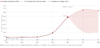
Supply Shortages: Since January 2025, prices for Ammonium Paratungstate (APT) and tungsten concentrate have more than doubled.
Export Controls: In early February 2025, China announced export controls on tungsten-related goods, causing EU imports to plummet by 36%.
High Demand: While hard metals account for about 65% of global tungsten consumption, new applications like tungsten wire for solar wafers and the defense sector are further absorbing supplies.
Your answer to the price explosion: While tungsten carbide prices remain volatile and dependent on Chinese mining quotas, boriding provides a stable calculation basis. Since boriding refines the surface of the existing steel, costs for expensive metallic spray additives are almost entirely eliminated.
Why Choose Boriding over Tungsten Spraying?
While thermal spraying of tungsten carbide (e.g., HVOF) is often expensive and prone to delamination (peeling), boriding integrates directly into the base material’s structure.

Cost Efficiency: Gain independence from the volatile global market prices for tungsten and cobalt.

Extreme Hardness: We achieve surface hardnesses of up to 2,800 HV, surpassing many classic hard metal coatings.

Full Protection: Thanks to our boriding process, we protect even complex internal geometries that are unreachable for spray nozzles.

Chemical Bond: No delamination occurs, as the protective layer grows directly out of the substrate.
APPLICATION EXAMPLES FOR REPLACING CARBIDE PROTECTION
To demonstrate how flexibly boronizing can replace sprayed carbide, we have summarized typical industrial applications:
1. Replacement of spray coatings on pump pistons (plungers)
Pump pistons in high-pressure and conveying technology are subjected to extreme abrasive and oscillating friction loads. Conventionally sprayed carbide coatings are prone to microcracks and coating delamination due to constant pressure changes. Boronizing creates an ultra-hard zone that is perfectly anchored in the base material. The result: minimal friction, absolute coating adhesion, and maximum service life for the plungers.
2. Plain bearing applications (bushing & sleeve)
In plain bearings, particle embedding and insufficient lubrication quickly lead to catastrophic wear. Boronizing the bushing and shaft/sleeve creates a tribological system with an extremely low coefficient of friction. The boronized surface effectively prevents “seizing” of the bearings and provides lasting protection against abrasive media.
3. Pump Components in Venturi Pumps
Due to the enormous flow velocities and entrained solids, Venturi pumps and injectors are subject to extreme hydroabrasive erosion. Spray coatings regularly fail here due to the narrow, internal geometries of the nozzles. Our Borier process penetrates even the most complex internal contours in gaseous or powder-based form, providing seamless protection for the Venturi components from the inside out.
4. Bearing Seats
Worn or rust-damaged bearing seats can lead to costly machine downtime. Precise boronizing of bearing seats hardens the surface to such an extent that mechanical wear, vibration, and rust can no longer take hold—ensuring that the geometry remains absolutely dimensionally stable.
Request a Cost Comparison Now
Don’t let rising material prices restrict your business. Contact us today, and let’s evaluate together how we can optimize your tungsten carbide applications through boriding.

BORTEC: Your Expert for Economical Wear Protection
In times of raw material shortages and pricing pressure, efficiency is the key. BorTec offers more than just a process; we provide the complete engineering expertise required to replace tungsten carbide with sustainable boride layers.
- Individual Consultation: We analyze your components to identify potential cost savings.
- Certified Quality: Highest precision for your wear elements.
- Fast Turnaround Times: Ensuring your production never grinds to a halt.
- Proudly Made in Tennessee – 100% Supply Chain Independence Unlike tungsten carbide, which is heavily dependent on volatile foreign markets and strict export controls, our entire BOROCOAT® boronizing process is performed completely in the USA. Proudly operated out of our facilities in Tennessee, BorTec ensures you get world-class, premium wear protection without the risk of import delays, international tariffs, or global supply chain crises. Secure your production with a reliable, local alternative that keeps American manufacturing strong.
Application: From Wear Elements to Hydroelectric Power


FAQ: Frequently Asked Questions about Tungsten Carbide and Boriding
Why is boriding a true alternative to tungsten carbide?
While Tungsten Carbide is applied mechanically as a coating, boriding is a thermochemical process. The protective layer grows into the base material. This prevents the dreaded peeling (delamination) under impact loads and offers a comparable or even higher hardness of up to 2,800 HV.
How do current tungsten carbide prices affect the market?
The raw material prices for tungsten and cobalt have risen massively due to global supply shortages. Since boriding does not involve spraying expensive precious metals or rare earths, but instead refines the surface of the existing component, costs remain stable and much more predictable.
Can boriding be used wherever hard metal is sprayed on?
In most cases: Yes. The switch is particularly beneficial in mechanical engineering and mining, where components are exposed to extreme abrasion. Boriding is especially superior when it comes to complex geometries or internal contours that cannot be reached uniformly with thermal spray processes (like HVOF).
Which materials can be borided as an alternative to hard metal spraying?
Almost all ferrous materials, as well as nickel-based and cobalt-based alloys, are excellently suited for boriding. You can find a detailed overview in our glossary.
Is the service life of borided components comparable to tungsten carbide?
Yes, in many applications it is even higher. Since the boride layer has an extremely low coefficient of friction and possesses very high thermal stability, wear and material fatigue are significantly reduced compared to classic hard metal coatings.
Get in contact now
Contact us today, and let’s evaluate together how we can optimize your tungsten carbide applications through boriding.